
Turn the Volume Down: Seven Japanese Games That Whisper Instead of Shout
Some of Japan's best games barely make a sound — and that's the whole point. A ranked tour of titles that treat silence, ambient noise, and wordlessness as the main event.
Category
18 articles
Some of Japan's best games barely make a sound — and that's the whole point. A ranked tour of titles that treat silence, ambient noise, and wordlessness as the main event.

Japan has always understood that how you give something matters as much as what you give. Game designers have been quietly applying that principle to digital rewards for years — and the emotional payoff is enormous. Here's why American studios are finally paying attention.

Most live-service games peak at launch and slowly hollow out. A handful of Japanese-developed titles have done something stranger and more impressive: they've become genuinely better years after release. Understanding why reveals a completely different philosophy about what a game owes its players.

Rage-quitting isn't a player problem—it's a design problem. Japanese developers have spent decades engineering spatial and temporal breathing room into their games, and the result is a fundamentally different emotional experience. Here's what's actually happening under the hood.

Japanese developers have been doing something radical for years — building games that actually shut up. As American players drown in pings, alerts, and feedback loops, a wave of intentionally quiet game design is becoming the unexpected antidote. Here's why silence is suddenly the most powerful sound in gaming.
Japanese game design has quietly built an entire philosophy around failure as a feature, not a flaw. From arcade cabinets that cheered you on even as you lost your last life to modern indie roguelikes that turn death into a tutorial, Japan figured out something the West is only now catching up to: the comeback is the whole point.

Some Japanese co-op games are built so that no single player can win alone — and that's entirely the point. Researchers and team coaches are starting to notice that the communication habits these games force on players are showing up in real workplaces. Here's why deliberately dependent game design might be the most underrated team-building tool of the hybrid work era.

Forget motivational posters and productivity podcasts. The most practical lessons in bouncing back from adversity might be hiding inside Street Fighter, Tekken, and Guilty Gear. We dug into what makes Japanese fighting games such surprisingly effective training grounds for real-world resilience.

Loading screens, queue lobbies, pause menus — American games treat these moments like awkward silences at a dinner party. Japanese developers, on the other hand, have spent decades quietly turning those in-between moments into something you actually look forward to. Here's what that difference reveals about two very different relationships with idle time.

Japanese developers have quietly been solving one of gaming's ugliest problems — not with bans or report buttons, but with clever design choices baked right into the experience. From shared goals to built-in kindness mechanics, there's a whole philosophy here that American studios haven't fully reckoned with yet.
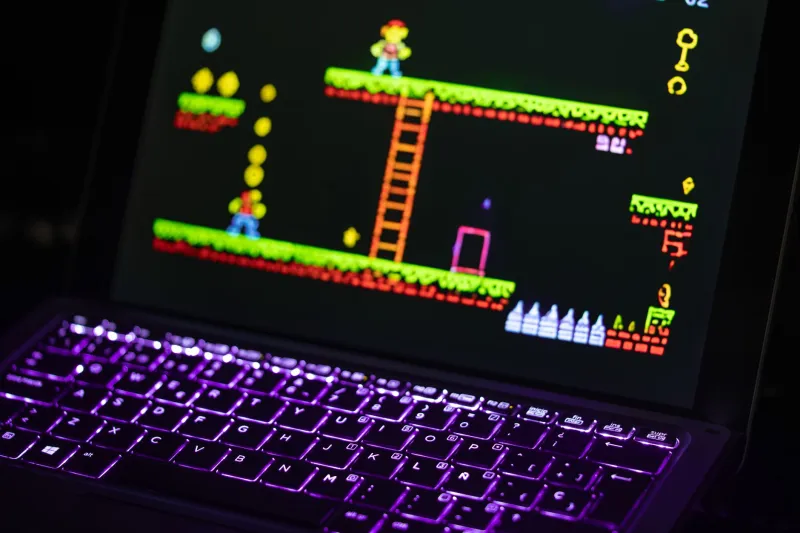
A wave of Japanese independent developers is using game mechanics themselves — not just story — as a vehicle for challenging power, obedience, and the systems we take for granted. And American players are starting to notice something feels different about these games, even if they can't quite explain why.

Long before 'cozy game' became a Steam tag and a TikTok aesthetic, Japanese developers were quietly building worlds designed to exhale rather than explode. Here's how a design philosophy rooted in everyday warmth became the most sought-after formula in the industry — and why burned-out American workers can't seem to get enough of it.
While American entertainment kept supersizing everything — longer seasons, bigger open worlds, more episodes — Japan was quietly perfecting the art of the ten-minute hit. Now, as streaming fatigue and attention burnout reach a breaking point, Japan's bite-sized design philosophy is starting to look less like a quirk and more like a blueprint.
Japanese mobile games have been making players wait for decades — and American gamers are finally figuring out that the pause might actually be the point. What started as a monetization quirk is quietly evolving into one of the most unexpected wellness tools in the digital space.

Dance coaches are using it for footwork drills. Drum instructors are prescribing it as homework. Even a few NFL special teams coaches have quietly started paying attention. Japanese rhythm games have been building world-class timing and muscle memory for decades — and American performers and athletes are finally catching on to what arcade regulars in Tokyo already knew.

What started as a 25-cent plastic capsule in a Tokyo toy shop quietly evolved into one of the most psychologically sophisticated monetization systems in the history of digital entertainment. We dug into the science, the culture, and the ethics of gacha — and what it reveals about the strange new economy of play.

American collectors are spending serious money on Japanese toys and gadgets that do absolutely nothing — and they'll tell you it's some of the best money they've ever spent. Behind the blind boxes, the desk creatures, and the satisfying-but-useless fidget objects lies a distinctly Japanese design philosophy that Western consumer culture is only beginning to understand.

Long before ChatGPT had a personality and Replika was giving people someone to talk to at 2am, Japan was already deep in the business of digital companionship. The lineage from a tiny plastic egg to today's AI chatbot industry is stranger, more human, and more intentional than most people realize. Here's the full story.